|
|

Stereo pairs became popular in the early 19th century, when photography made them easier to produce. They consist of one image for the right eye and one for the left, leveraging our binocular vision, our natural ability to perceive depth. The pairs can be lined up for parallel or cross-eye viewing, with the goal being for each eye to view one of the two images independently of the other. 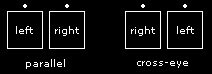
All of the stereo images on this site are setup for cross-eye viewing. Guide dots at the top of each image may assist you in finding focus. There are several methods that can be used when getting started, a few of which are suggested below, but once you have had some practise, you will be able to snap the three-dimensional image into focus with little thought or effort. Method 1: Cross your eyes while looking at the stereo image. Uncross them slowly, until you bring the third image in the centre into focus. Method 2: Hold up your index finger between your face and the stereo image. Focus on your index finger but pay attention to the stereo image behind it. Move your index finger various distances between your face and the image, periodically shifting to the stereo image, until you bring the third image in the centre into focus. Method 3: Using either of the methods above, work only with the guide dots. Once you have the third dot in the centre in focus, shift to the stereo image below it. 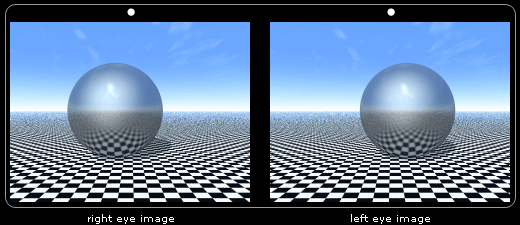
|
 |
| Copyright © 2001-2005 sebastianfernandes.com | Terms of Use |
|
|